Environment & Wildlife
Biodiversity in our Churchyards
We had a special guest visitor to Holy Trinity, Eccleshall and St Chad’s Slindon on Sunday 14th July 2024: Alan Preece, Ecology and Green Infrastructure Specialist at Telford & Wrekin Council. Alan holds an MSc in Habitat Creation and Management from Staffordshire University making him the perfect person to guide us on a tour of our churchyards and help us see them in ways many of us haven’t before.
We are extremely grateful to Alan for freely giving us a considerable chunk of his time, energy and knowledge to deliver such an informative and enjoyable event!
Barb Johnson & Sue Marsh
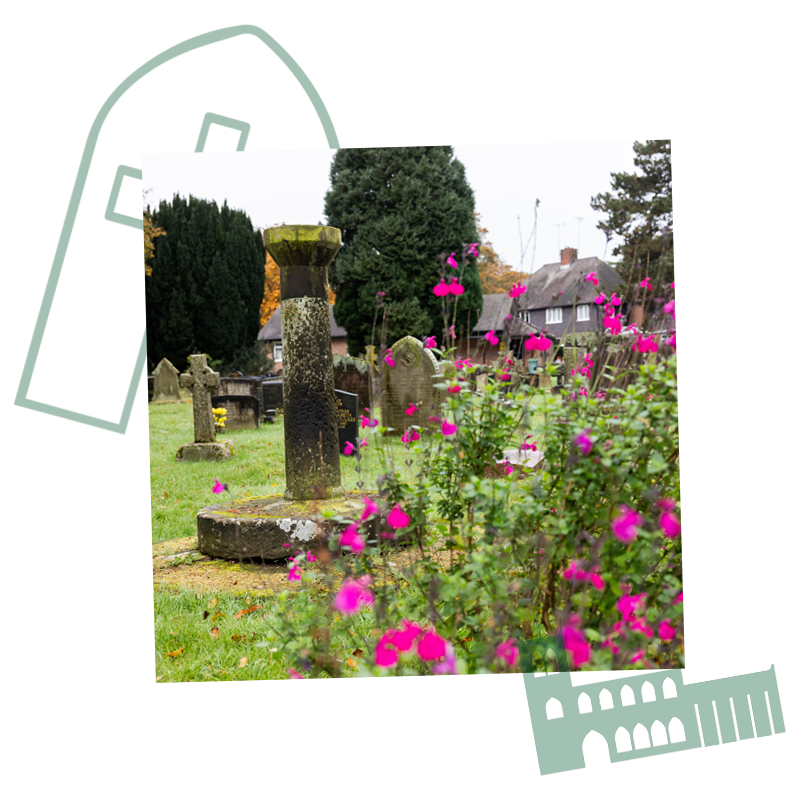
Alan started at Holy Trinity…
Ably assisted by half a dozen or so enthusiastic youngsters and a merry band of young-at-heart garden and wildlife enthusiasts, Alan started by revealing to us the variety of plant species growing in a single square metre of well-manicured lawn at the front of the church.
The children – being closer to the ground – spotted a total of nine different types of plants in just this small area. Alan stated that this is a reasonably high score and a sign of healthy biodiversity.
The group continued to pepper Alan with questions as we walked around the rear of the churchyard and discussed ways to encourage even more biodiversity – such as encouraging foxgloves at the rear of the churchyard and pruning the diseased Ash tree to allow the dog violets to grow underneath it.
Alan also pointed out where we could usefully create compost piles from our grass cuttings to assist hibernating hedgehogs and let the boundary hedge grow a bit bigger to give nesting sites for small birds and mammals We also discussed where and how we might be able to allow the grass to be mown less frequently.
…then on to St Chad’s
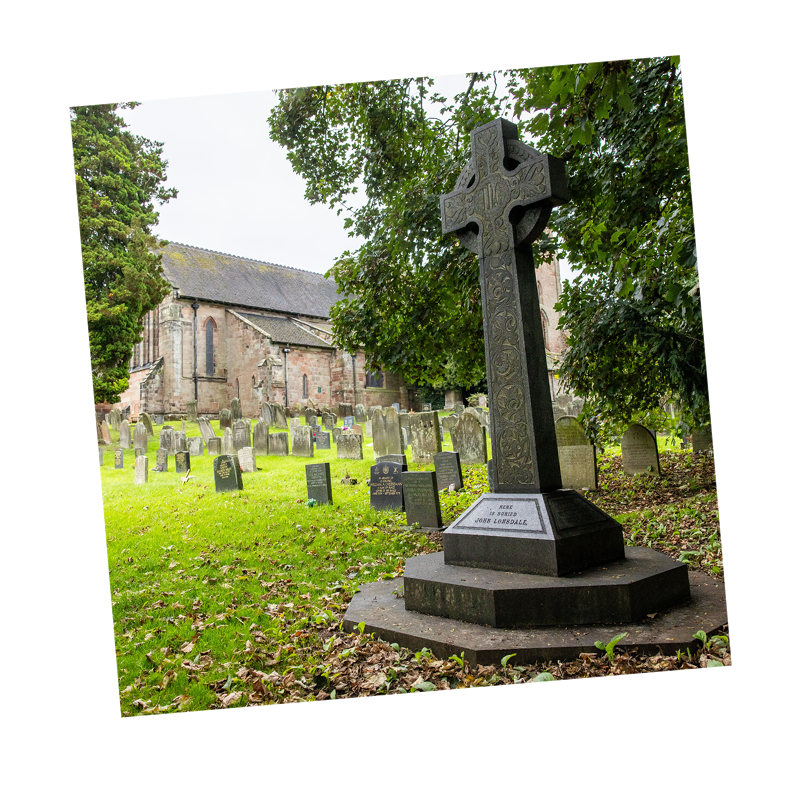
Alan saw the two wildflower areas within the churchyard and it was a joy to see so many flowers in bloom including the delicately blue harebells, the vivid orange fox and cubs, bright yellow hawksbeard and the yellow rattle seedheads. Alan was impressed with our progress so far; the management of the areas was discussed so that the diversity of the flowers can be maintained and improved.
This includes continuing with ‘no mow May’ for the whole churchyard and mowing the wildflower areas towards the end of August when most flowers will have produced mature seeds. Leaving the mown area for a couple of days would allow seeds to fall, the ‘hay’ could then be gathered and put in a heap to decompose. Alan thought we could also harvest and scatter some of the seeds to extend the wildflower area on the south side.
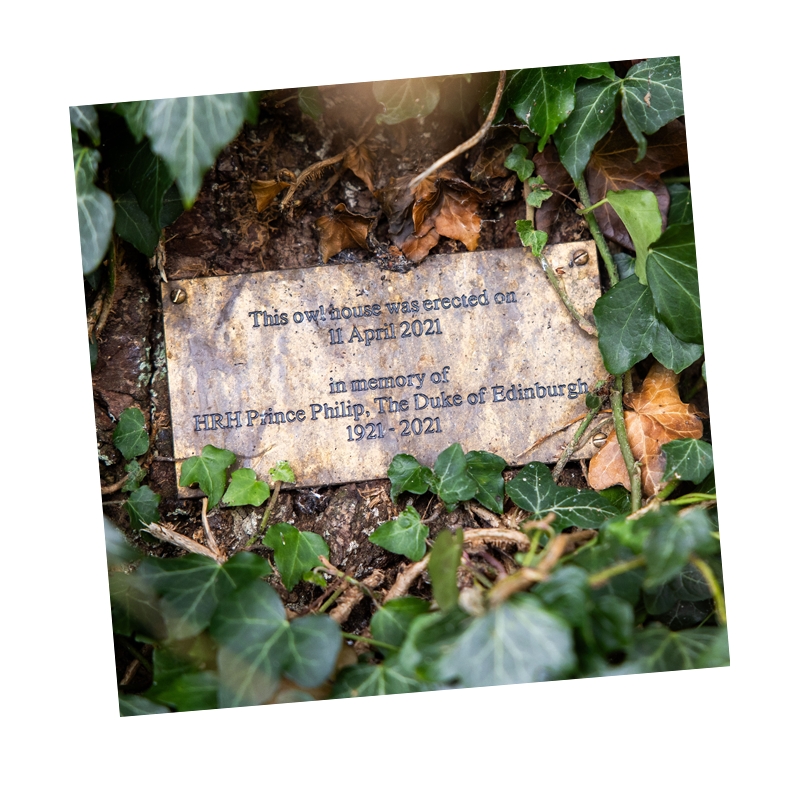
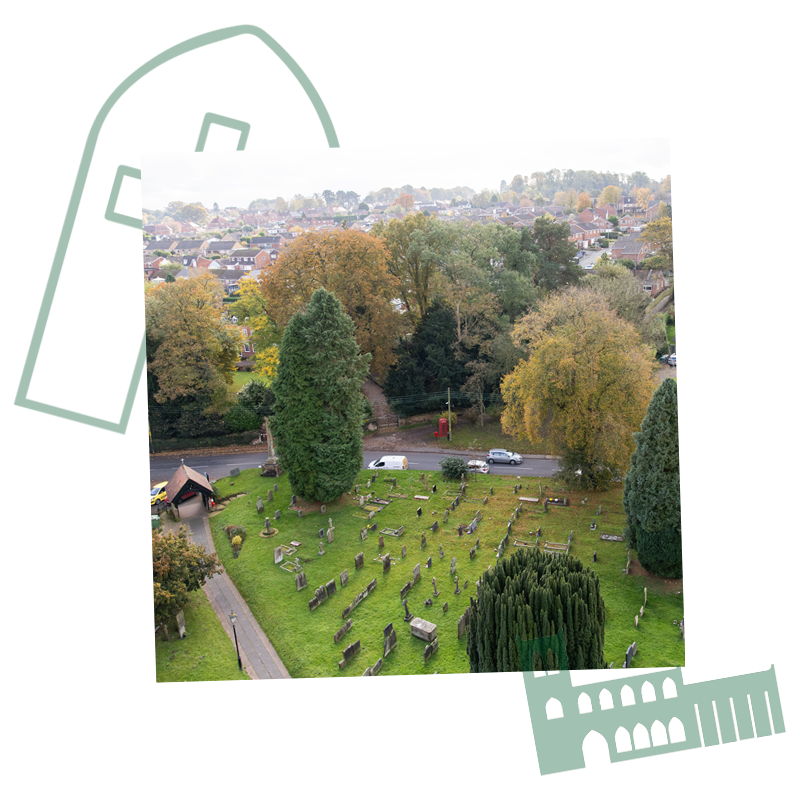
Birds and mammals were next to be discussed as we walked along the North and East facing hedges. Alan pointed out that owls would benefit from a strip of reduced rate mowing here, providing a corridor for mammals, the mammals then becoming a possible source of food for the owls. The owl box (installed in 2021 in memory of HRH Prince Phillip, The Duke of Edinburgh, 1921-2021) in the oak tree in the northeast corner of the churchyard may have been occupied by kestrels this year as kestrels have been seen perching on the church roof.
Hedgehogs would also enjoy snuffling through the unmown strip of land and some thick core tussocks would be beneficial to voles. Alan also suggested constructing a simple hedgehog house.